
At Unfold, we have been inside enough briefs to know when something has shifted. Over the past few years, the conversations we are having with founders, HR leads, and operations heads have changed in a specific way: space is no longer a facilities decision. It is a business one. Hybrid work has made headcount unpredictable, hiring pressure has made the workspace a talent signal, and tighter real estate budgets have made every square foot a deliberate decision. The result is a wave of fit-outs and relocations where design is no longer decorative; it is operational.
This piece covers what serious businesses are prioritising when they commission office design today - based on what we see in the briefs coming through our door, and what we push back on when the brief is not right.
The Shift Driving These Decisions
A decade ago, most office design decisions were made late in the process, by a contractor working from a floor plan or a landlord's fit-out team working from a standard template. Today, founders, HR leads, and operations heads are involved from the brief stage. That shift in who is making decisions, and how early, is the clearest sign that something has changed about how businesses think about space.
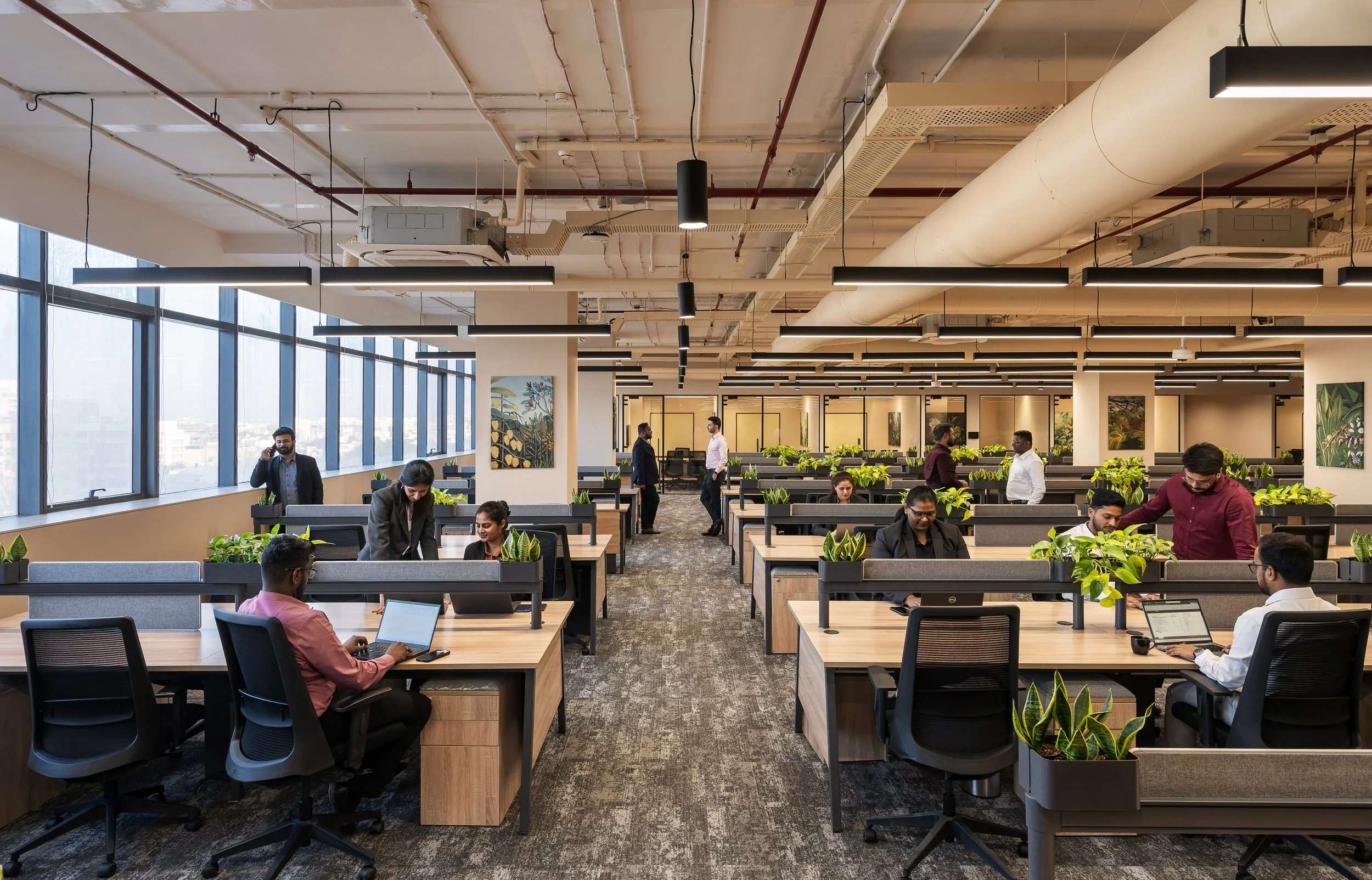
Designed by Unfold — UrbanWrk at MontClaire, Pune
India's commercial real estate expansion has accelerated this. New office parks, Grade A stock, and new builds across Tier 1 and Tier 2 cities mean many businesses are not renovating what they have but making design decisions for a new space from scratch, with a full lease term ahead.
Post-2020, employee expectations have added another layer to the brief. The growing market for home office interior design has raised the bar for what people expect from a workspace. The office now has to justify itself to the people using it, and businesses that ignore that are seeing it in retention numbers.
The cost of getting the design wrong in this environment is concrete. A fit-out that does not reflect how the team actually works creates friction for the entire lease term. That is why more businesses are getting the brief right before a single wall goes up.
What Businesses Are Prioritising
Across fit-outs and new builds, six priorities are coming up consistently in how businesses are briefing interior designers for office spaces today.
Flexibility for hybrid work
Layouts that perform at variable occupancy and not fixed capacity. Activity-based zoning, hot-desking, and reconfigurable spaces let a team of 40 function well on a day when 20 show up, without the office feeling half-empty.Employee well-being and ergonomics
All three are now on the brief for most serious fit-outs in India, after years of being treated as secondary to layout and finishes. Businesses are specifying them as functional requirements because the cost of ignoring them shows up in productivity and retention, not just comfort.Brand identity built into the space
For client-facing firms and companies actively hiring, the space communicates positioning before anyone in the room speaks. When we designed the RR Kabel office in Mumbai, the material palette, the proportions of the boardroom, and the approach sequence were all deliberate signals to a specific kind of visitor. That level of intentionality does not happen by accident; it has to be designed in from the brief.Right-sizing for smaller teams
Smaller businesses are moving away from scaled-down versions of enterprise layouts and commissioning designs built around their actual headcount, workflows, and client interactions.Integrated execution
When architects, contractors, and suppliers work independently, no single party owns the outcome, and that is where delays and cost overruns begin. A design-build structure puts one party in charge from concept through completion.ROI clarity before sign-off
Before approving a brief, businesses are asking what the layout does for cross-team visibility, how the space functions at partial capacity, and what the cost per workpoint is. Design decisions that cannot answer those questions do not make the cut.
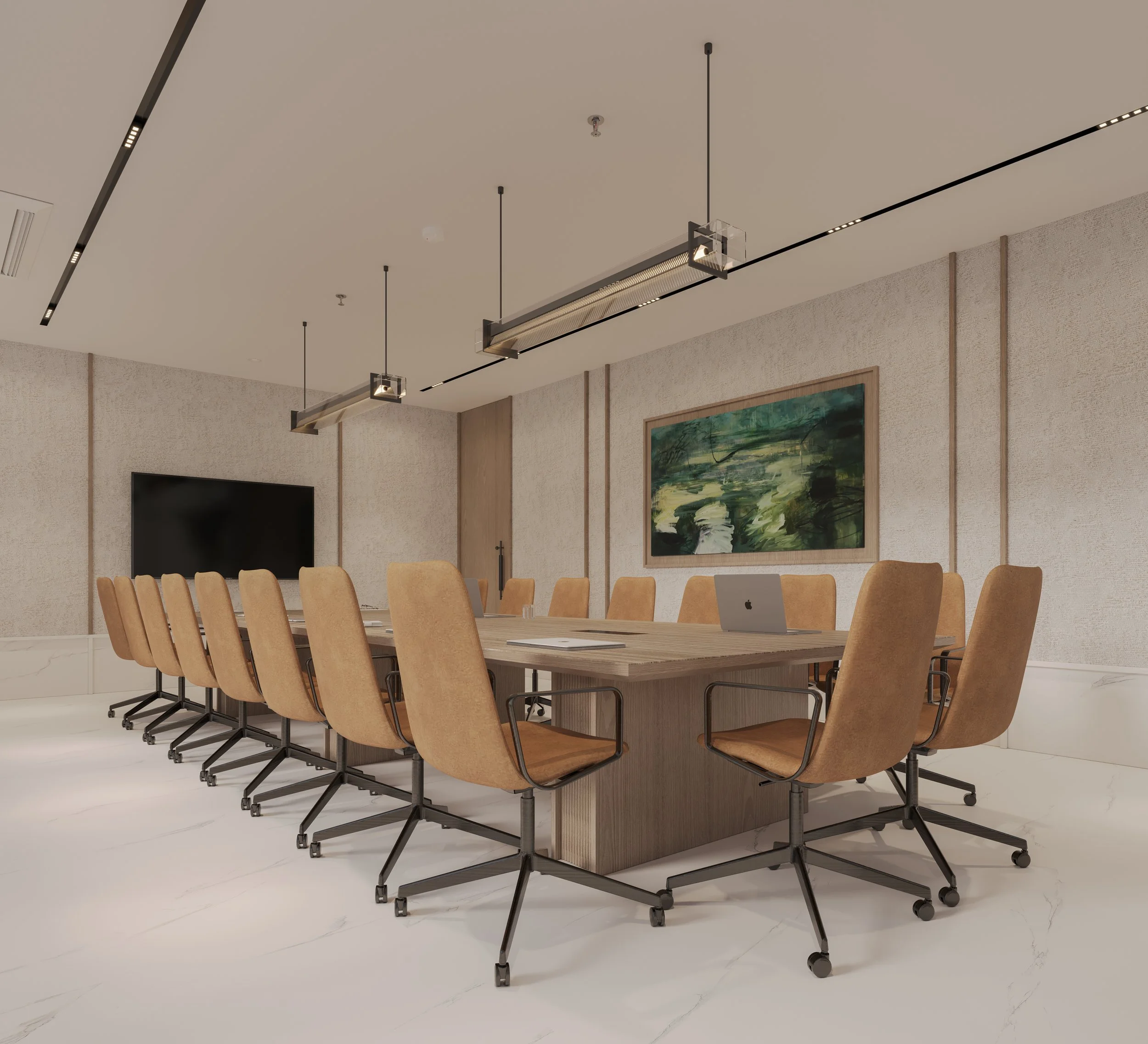
Designed by Unfold — RR Kabel Boardroom, Mumbai
Choosing the Right Design Partner
A well-considered brief can still produce a disappointing space if the office interior design company executing it is not structured to carry it through. The gap between what was designed and what gets built is almost always a coordination problem, not a design one.
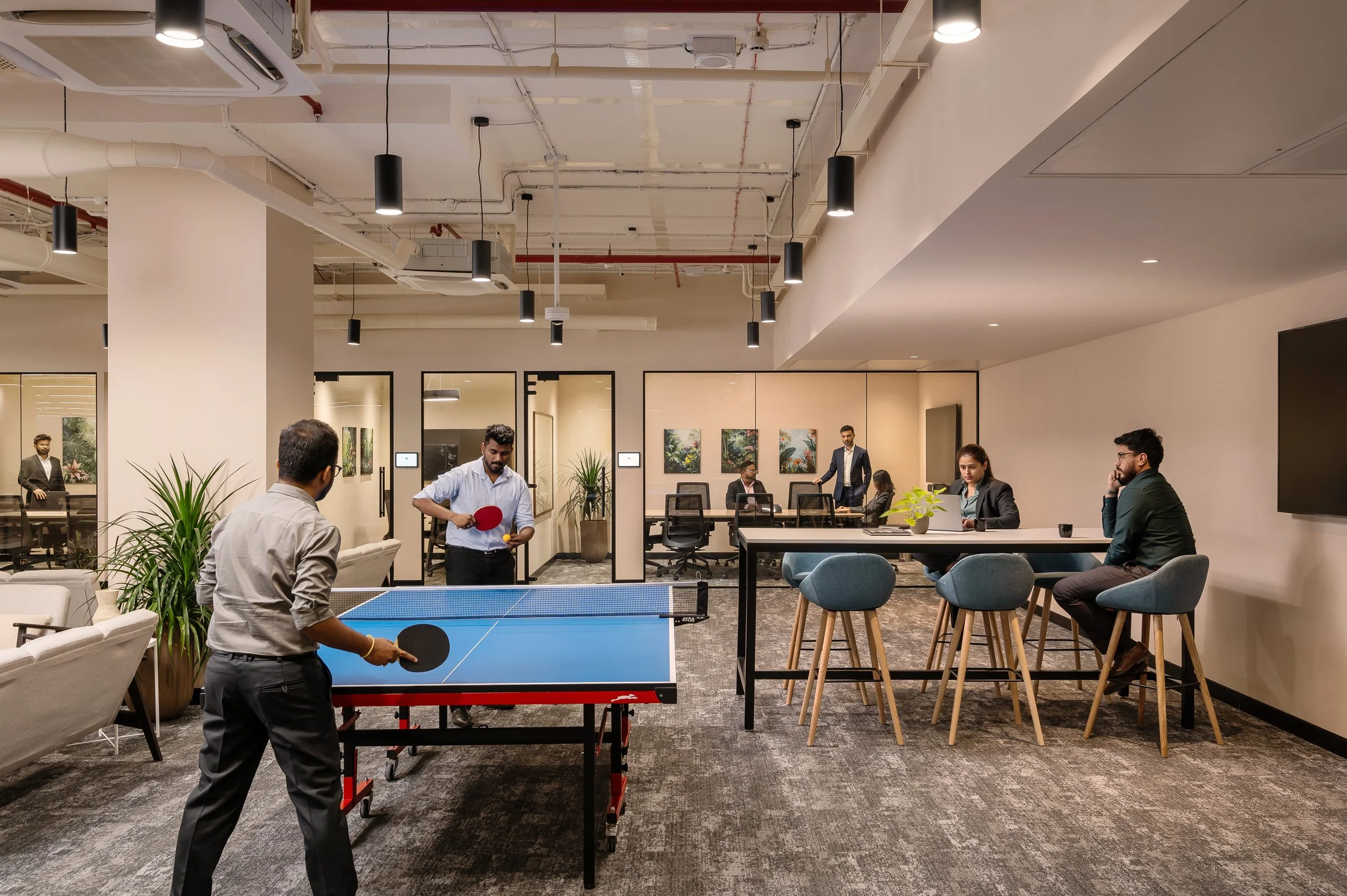
Designed by Unfold — UrbanWrk at MontClaire Breakout Space, Pune
Firms that handle commercial office interior design and build under one roof close that gap by default. The team that made the spatial decisions is the same team managing their execution, which means fewer things get lost between disciplines and fewer decisions get remade on site.
When businesses evaluate design partners, they often compare portfolios before asking the questions that actually determine fit. The portfolio shows taste; it does not show how a firm handles a three-week delay from a supplier or a brief that changes six weeks into construction. Ask how the firm is structured, how early they bring budget into the conversation, and whether their past projects match your scale and use type. At Unfold, we bring budget into the conversation at the brief stage, not after concept. It changes what we design, and it changes how often the design actually gets built as intended.
Where Indian Office Design Is Headed
Office design in India has quietly shifted from a facilities decision to a business one. The companies moving into new spaces or upgrading existing ones are approaching the brief with a level of intention that was uncommon five years ago, and the spaces they are creating reflect that.
For businesses currently evaluating a new space, the question we would ask is not “what does our office look like” but “what does our office do”? Does it support the way the team actually works? Does it communicate something true about the organisation? Does it justify the commute? The companies getting this right are the ones treating the brief as a business decision, not a procurement one. That is the only kind of brief we are interested in taking.
See how Unfold approaches commercial office interior design.