
The Design-Build Model: How Integrated Delivery Works for Commercial Projects
Most commercial fit-outs involve at least three separate parties: an architect, a contractor, and a rotating cast of vendors. Each operates under a different contract, answers to a different brief, and measures success differently. When the project runs smoothly, this is manageable. But when it doesn’t, there is no single party responsible for fixing it. The result is time lost, budgets stretched, and spaces that don't quite match what was originally planned.
Design-build is a delivery model that consolidates this structure into one firm, one contract, and full accountability from the first site visit to the final walkthrough. The sections below cover what that model actually involves, where the traditional approach breaks down, and which projects benefit most from integrated delivery.
What the Design-Build Model Actually Is
In the traditional model, design and construction are sequential and separate. An architect develops drawings, hands them to a contractor, and the contractor builds. If something in the drawings does not work on site, the resolution goes back through the architect, adding time and cost before construction can continue. If a vendor misses a deadline, the project timeline moves, and the client gets a later handover date. Nobody is responsible for either problem, because nobody's contract covers the gap between them.
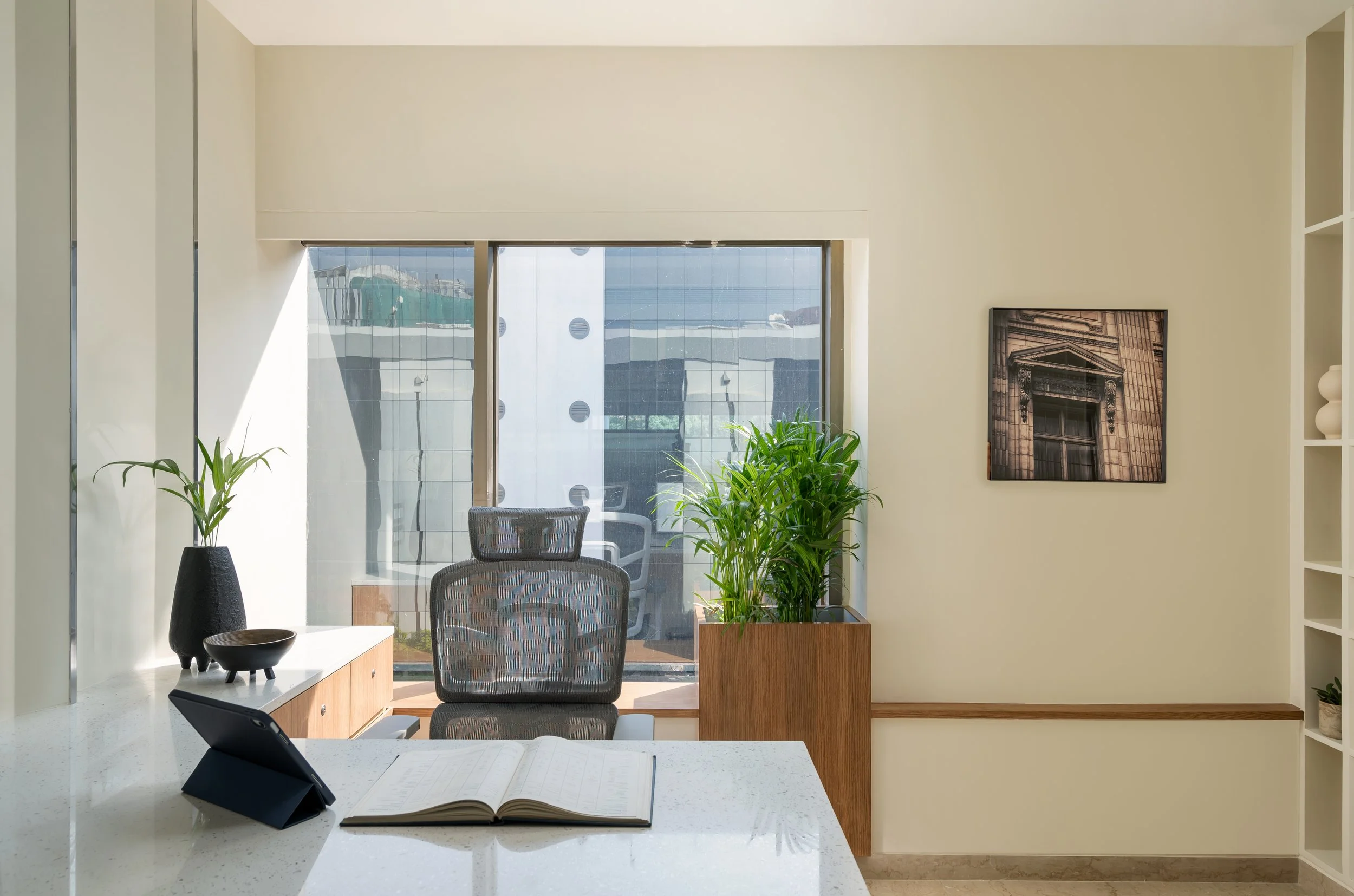
Designed by Unfold - Astik Dyestuff
A commercial design-build firm holds responsibility for both the design and the build under one contract. This means the same organization that develops your spatial plan also procures materials, manages site execution, and handles handover. There is no gap between what is designed and what gets built. The contract is with one firm, and accountability stays there throughout.
Why the Traditional Model Fails Commercial Projects
The coordination gap is the most consistent failure point. Architects design from the brief. Contractors build from site conditions. When these two inputs are not in the same room, the conflicts show up during execution: materials that cannot be sourced as specified, sequences that do not match the drawings, substitutions that cost more than the original.
Cost surprises follow the same logic. A specification that looked straightforward on paper may require a substitution. The substitution costs more, and by the time it surfaces, design is already locked, and construction is already underway. There is no shared process to flag the mismatch before it becomes a cost issue.
Vendor schedules compound this. When one vendor misses a deadline, contractors restructure their sequence. When contractors restructure, other vendors are affected. Nobody owns the cumulative delay, and the client is usually the last to know.
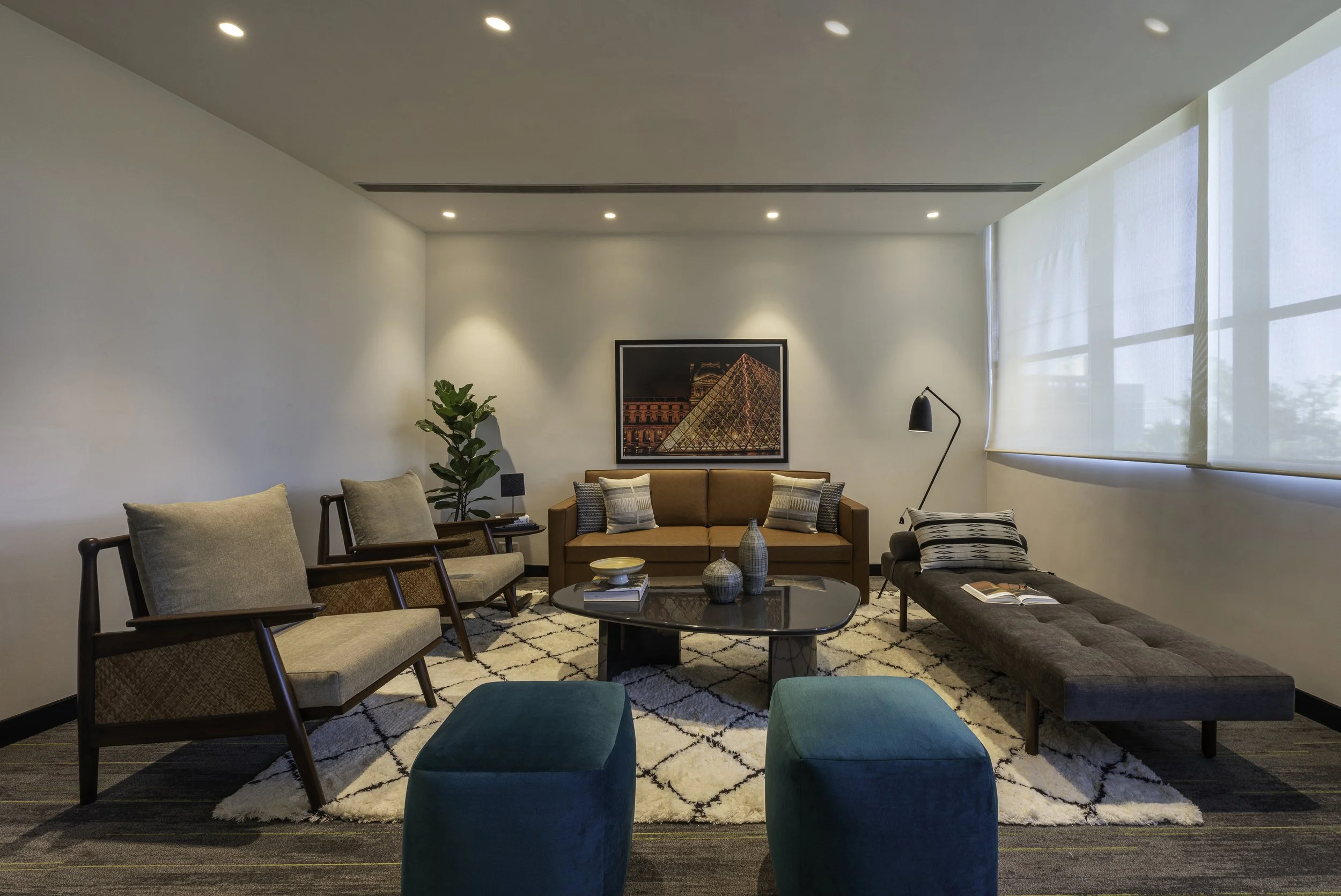
Designed by Unfold - UrbanWrk at Pentagon 5
The underlying issue is an accountability gap. In a fragmented structure, every stakeholder is responsible for their own scope. When something goes wrong at the intersection of two scopes, it falls outside everyone's contract. Nobody is formally obligated to resolve it.
The underlying issue is an accountability gap. In a fragmented structure, every stakeholder is responsible for their own scope. When something goes wrong at the intersection of two scopes, it falls outside everyone's contract. Nobody is formally obligated to resolve it.
How Integrated Delivery Works, Phase by Phase
In an integrated model, design and build decisions do not move in sequence from one party to the next. The same firm carries the brief, the constraints, and the budget through every stage of the project.
Step 1: Concept and planning
The process starts with a brief intake, site assessment, and budget alignment. Build thinking enters at this stage, not after design is complete. Cost implications and site constraints are factored into early decisions, reducing the revisions that occur once development is underway.
Step 2: Design development
Spatial planning, material selection, and technical drawings happen with active input from the construction team. If a material is difficult to source or carries a longer lead time, the project schedule is built around that from the start rather than revised later. The drawings that come out of this phase reflect what will actually be built.
Step 3: Execution
A single firm manages procurement, site coordination, and quality control. There is no handoff between a design team and a separate contractor, and no gap between what was specified and what gets built.
Step 4: Handover
Snagging, documentation, and the client walkthrough are handled by the same team that designed and built the space. The firm remains the single point of contact until the space is formally handed over.
Where Design-Build Performs Best
Integrated delivery has the clearest advantage on projects where multiple systems, tight timelines, or brand consistency leave little room for coordination failures. These are also the conditions most common across turnkey commercial projects.
Commercial offices involve multiple interdependent systems: mechanical, electrical, and plumbing (MEP), lighting, acoustics, furniture, and finishes. The more these systems depend on each other, the more a coordination gap costs.
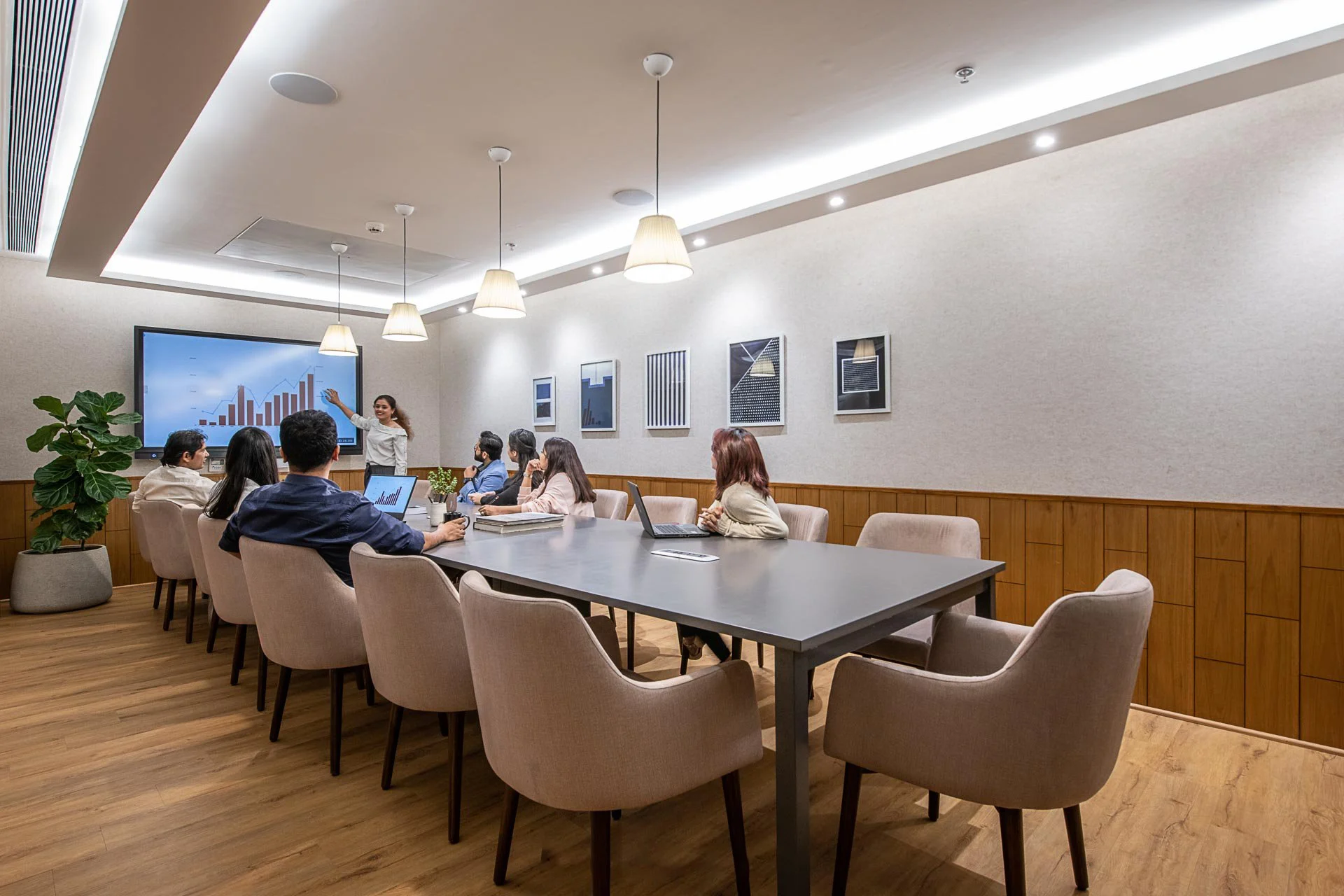
Designed by Unfold - UrbanWrk at Sai Radhe
Hospitality fit-outs carry the same complexity with the added pressure of brand consistency. A restaurant or hotel needs the finished space to match a specific experience. Turnkey interior design, where one firm controls every element from architectural design to furniture placement, is better suited to this than a fragmented vendor approach.
Learning environments often have timelines tied to academic calendars, which means a delay carries consequences that extend beyond the project itself. Integrated delivery reduces the variables that cause slippage.
Integrated delivery works for large flagship fit-outs and for smaller commercial spaces with the same coordination demands. For businesses with offices or properties across multiple cities, a design-build firm with pan-India delivery means one brief, one process, and no need to manage separate firms across locations.
A Simpler Way to Run a Complex Project
The design-build model gives founders and operators one point of accountability across every phase of a commercial fit-out. No coordination overhead, no cost surprises that surface after design is locked, no finger-pointing when timelines slip. The decisions that typically cause problems in fragmented projects are resolved internally, before they reach the client.
If you are evaluating a design model for an upcoming project, Unfold's portfolio covers a range of turnkey interior design and commercial design-build projects across offices, hospitality spaces, and learning environments in India.
office · design and build · office interiors · workspace interiors · design aesthetics unfold spaces · unfold · design brief · commerical fit-out · Integrated delivery · design development · contract · vendors